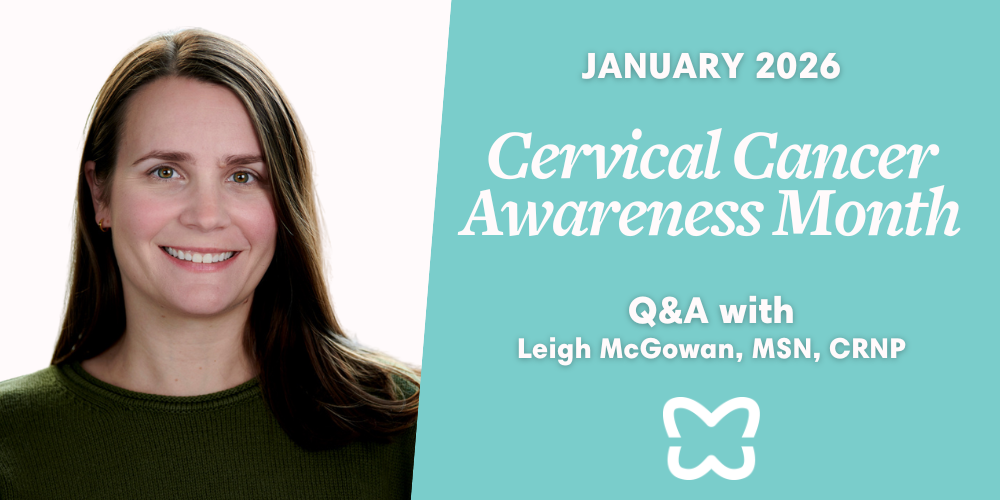
January is Cervical Cancer Awareness Month, a public health campaign to educate people about prevention, early detection screenings, and the important role of the HPV vaccine. Leigh McGowan, MSN, CRNP, our Lead Nurse Practitioner, shared some important information about Cervical Cancer prevention and detection:
1. What is the primary cause of cervical cancer?
Cervical cancer is caused by HPV or human papillomavirus. It is present in 99.7% of cervical cancers worldwide.
2. Are there ways for people to reduce their risk of cervical cancer?
Get the Gardasil - also known as the HPV - vaccines! These can be given all the way up until the age of 45. Research has shown a significant decrease in cervical precancers and cervical cancers in those that received these vaccines. The vaccines also help prevent genital warts!
3. What services does The Midwife Center provide to screen for or help prevent cervical cancer?
The Midwife Center offers pap smears which are the traditional method of screening for cervical cancer. Recently, we started offering self-collected HPV screening which is a less invasive, more comfortable screening option for certain individuals. Colposcopy, which is more of a diagnostic test, is available for those that have abnormal screening results. And, of course, we offer the Gardasil vaccines!
4. What does a cervical cancer screening involve? What would you say to someone who is nervous about getting a screening?
A pap smear uses a small brush and/or spatula to collect cells from the cervix. Self-collected HPV screening involves rotating a swab inside of your own vagina. It is very normal to be nervous about these sorts of exams. The Midwife Center also recognizes that these exams can be triggering and traumatizing. Some ways to make someone more comfortable might include not using stirrups, using a smaller speculum and using nitrous during an exam.
5. When should someone receive their first cervical cancer screening? How often should they receive screenings?
Cervical cancer screening is recommended to begin at age 21. For those under the age of 30, it is performed every 3 years. For those over the age of 30, it is performed every 5 years.
Leigh and our other providers are here to help you understand your cervical cancer risk, address concerns, and provide routine screenings and HPV vaccinations. Give us a call at 412.321.6880 to schedule an appointment.
You can also learn more about cervical cancer from the National Cervical Cancer Coalition.
Disclaimer: This content is provided for informational purposes only and should not be taken as medical advice.