Last week, the March of Dimes published a major report, “Nowhere to Go: Maternity Care Deserts Across the U.S.” The report details the increasing lack of access to maternity care and the key solutions March of Dimes has identified - including midwifery and birth center care.
March of Dimes found that midwifery and birth center care result in better health outcomes, higher client satisfaction, and lower costs. Despite this, there are many barriers to providing and receiving these types of care.
Report Highlights & Key Findings
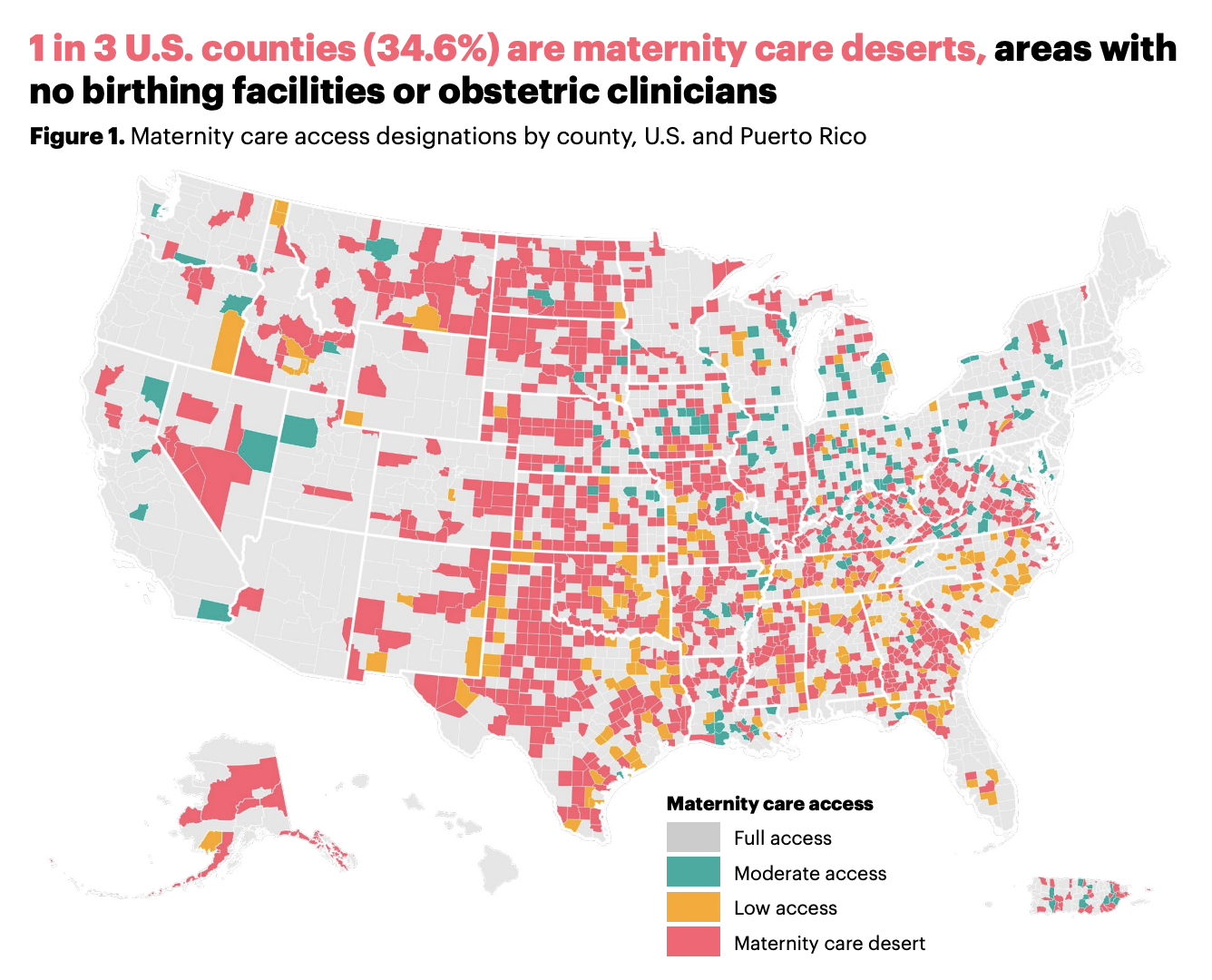
Source: March of Dimes
Maternity Care Deserts: 1 in 3 U.S. counties are maternity care deserts, or areas where there is not a single obstetric care provider.
- 2.4 million women of reproductive age live in maternity care deserts.
- 57.9% of rural counties lack an obstetric clinician, nearly 3x higher than urban counties.
- 1 in 10 counties in Pennsylvania are maternity care deserts.
The Role of Midwifery & Birth Center Care: Midwifery care "is associated with higher rates of spontaneous vaginal delivery and lower use of interventions such as Cesarean delivery, instrumental delivery, and episiotomy. Individuals receiving midwifery care also report higher satisfaction." Similarly, "birth centers are associated with improved outcomes and lower-cost, patient-centered care."
Source: March of Dimes
Midwives are already on the front lines of addressing maternity care deserts, as NPR reported in their story on Nadia Gramby, a certified professional midwife, and how she is making a difference for families, and Black women in particular, in rural Alabama.
The rate of people seeking midwife-led and out-of-hospital birthing care is increasing, though the overall numbers are still low:
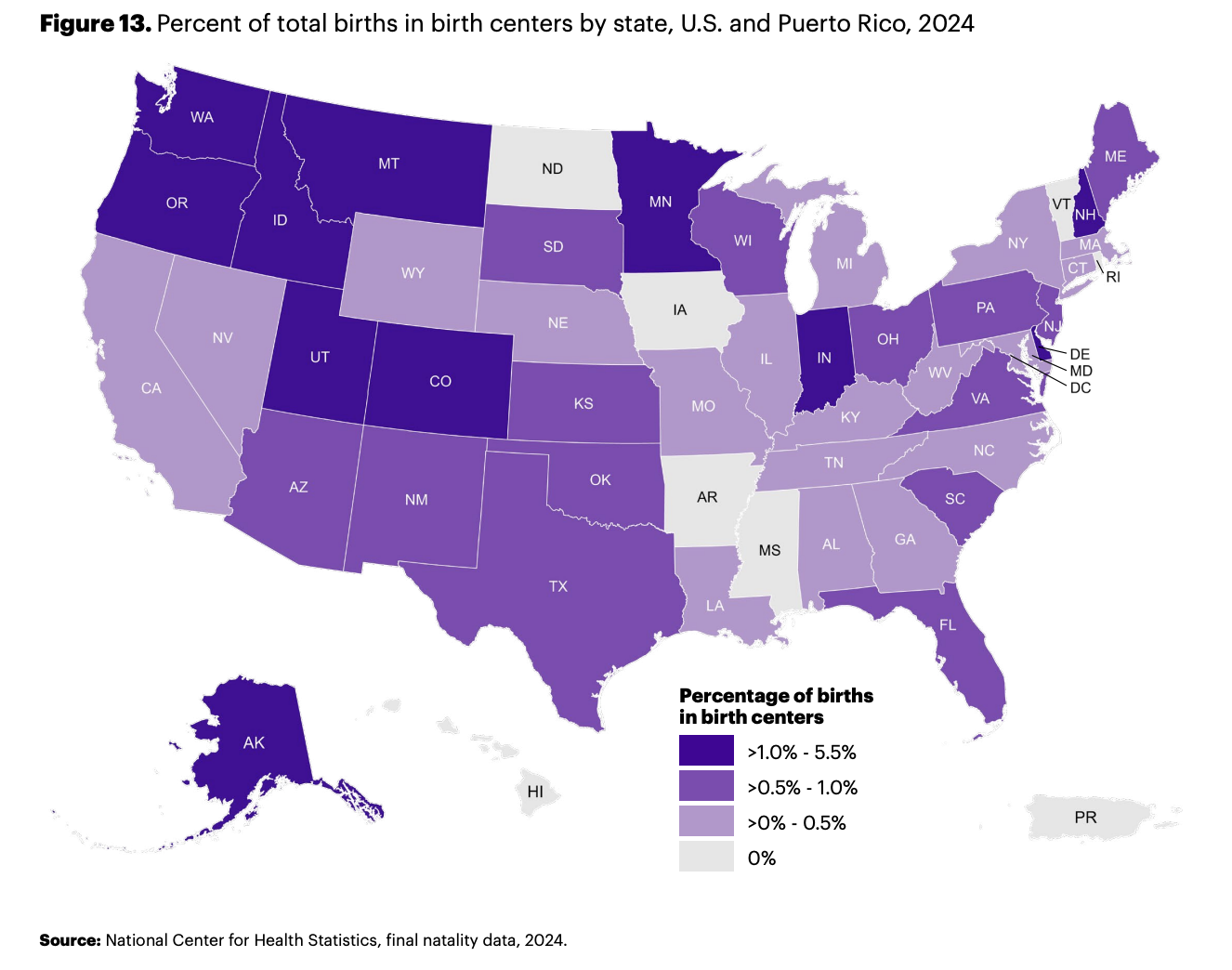
- 0.6% of births in 2024 took place in a birth center setting, up from 0.5% in 2016
- 11.6% of hospital births were attended by midwives in 2024, up from 8.4% in 2016.
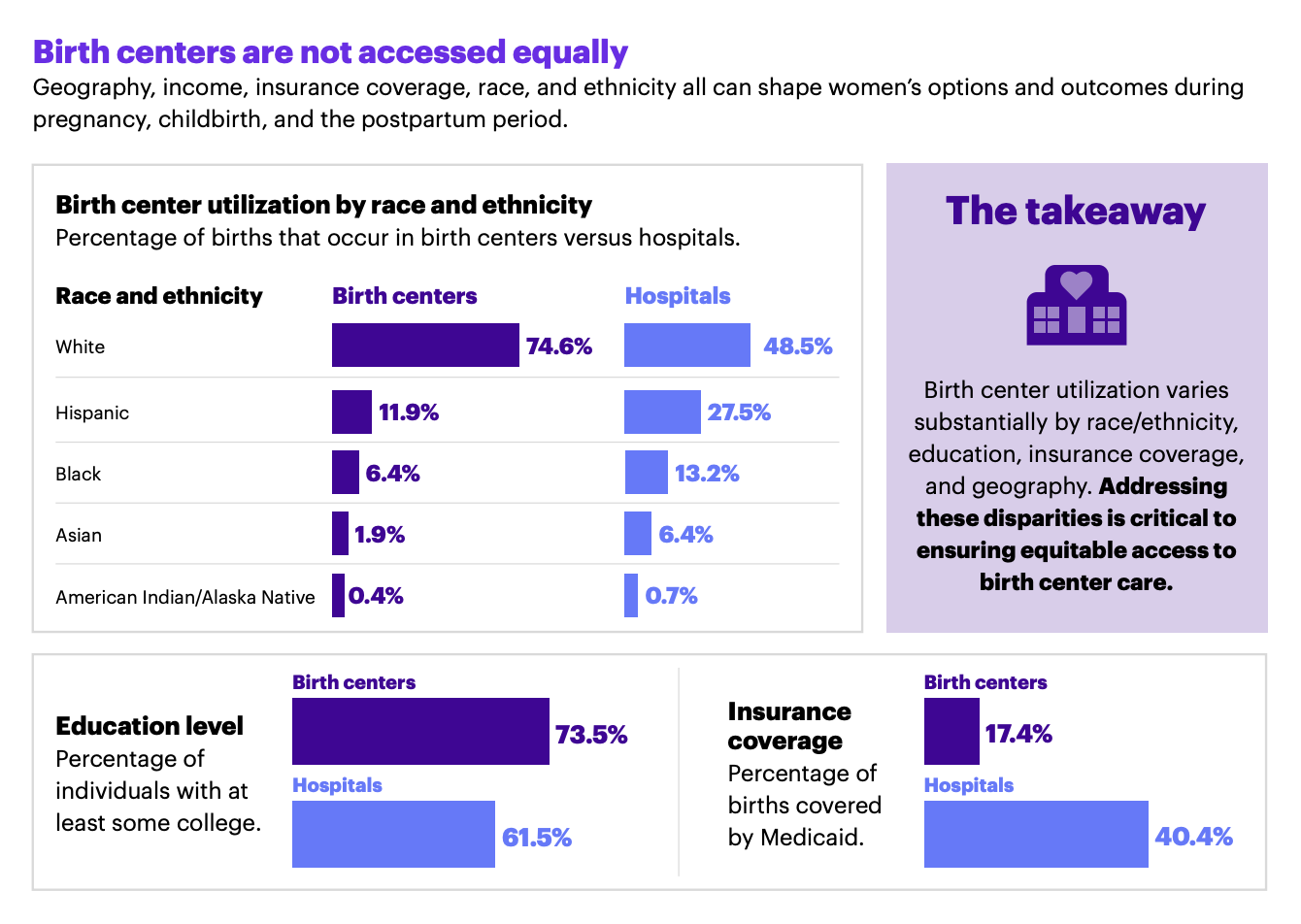
Factors such as race, education, and insurance coverage can all impact birth center access. Birth centers remain less accessible to BIPOC people as well as people with Medicaid insurance:
- 17.4% of birth center births utilize Medicaid insurance, compared to 40.4% of hospital births.
- 6.4% of Black pregnant people utilize birth centers, compared to 13.2% for hospital births. Similar disparities exist for Hispanic, Asian, and American Indian/Alaska Native people.
Source: March of Dimes
The Midwife Center’s percentage of BIPOC clients and clients with Medicaid is higher than the average across birth centers as a result of our community engagement and education programs, but we still have a lot of work to do to increase awareness of and access to our services in the Pittsburgh region.
Geography is another major factor in access to birth center care. There are around 400 freestanding birth centers in the U.S., but an estimated 17 states do not have any birth centers. Rising healthcare costs, regulatory barriers, and more make it difficult for new birth centers to open and for existing birth centers to remain sustainable. Earlier this year, Lifecycle Wellness and Birth Center, located outside of Philadelphia, closed after 47 years of service due to these challenges.
Other Takeaways: To address maternity care deserts, we need to invest in multiple aspects of the maternity care ecosystem, including doulas and other non-clinical professionals, obstetric clinicians, and affordable health insurance coverage.
Midwifery & Birth Center Policy Recommendations
March of Dimes calls for expanded access to birth centers and supporting the integration of midwives into the broader healthcare system to address maternity care deserts.
Midwifery policy recommendations include:
- Allow midwives to practice within their full scope of training
- Ensure pay parity between midwives and physicians through improving reimbursement rates
- Expand licensure for Certified Midwives, a process that is in progress in PA
Birth center policy recommendations include:
- Improve financial sustainability through establishing equitable Medicaid reimbursement rates
- Standardize quality measures by aligning state regulations with the Commission for the Accreditation of Birth Centers (CABC) standards
- Integrate into care systems through standardized coding, contracting mechanisms, and inclusion in provider networks to ensure coordinated care
The State of Maternity Care Policies in Pennsylvania
In Pennsylvania, we have made some meaningful progress towards improving policies for midwives and birth centers as well as the broader maternal healthcare system. Most recently, in May, Pennsylvania passed the Midwifery Modernization Bill, now Act 14, which allows for licensure of certified midwives. Emily McGahey (TMC’s Clinical Director) was an integral part of the coalition working towards this legislation over the last several years through her role as Legislative Director of the Pennsylvania affiliate of the American College of Nurse-Midwives. Now, Emily is working alongside experts on the implementation of the legislation.
Pennsylvania also passed the Physical Therapy Practice Act in May. This allows nurse-midwives to refer their patients for physical therapy and, importantly, pelvic floor therapy, making it easier for women and other patients to access this essential care.
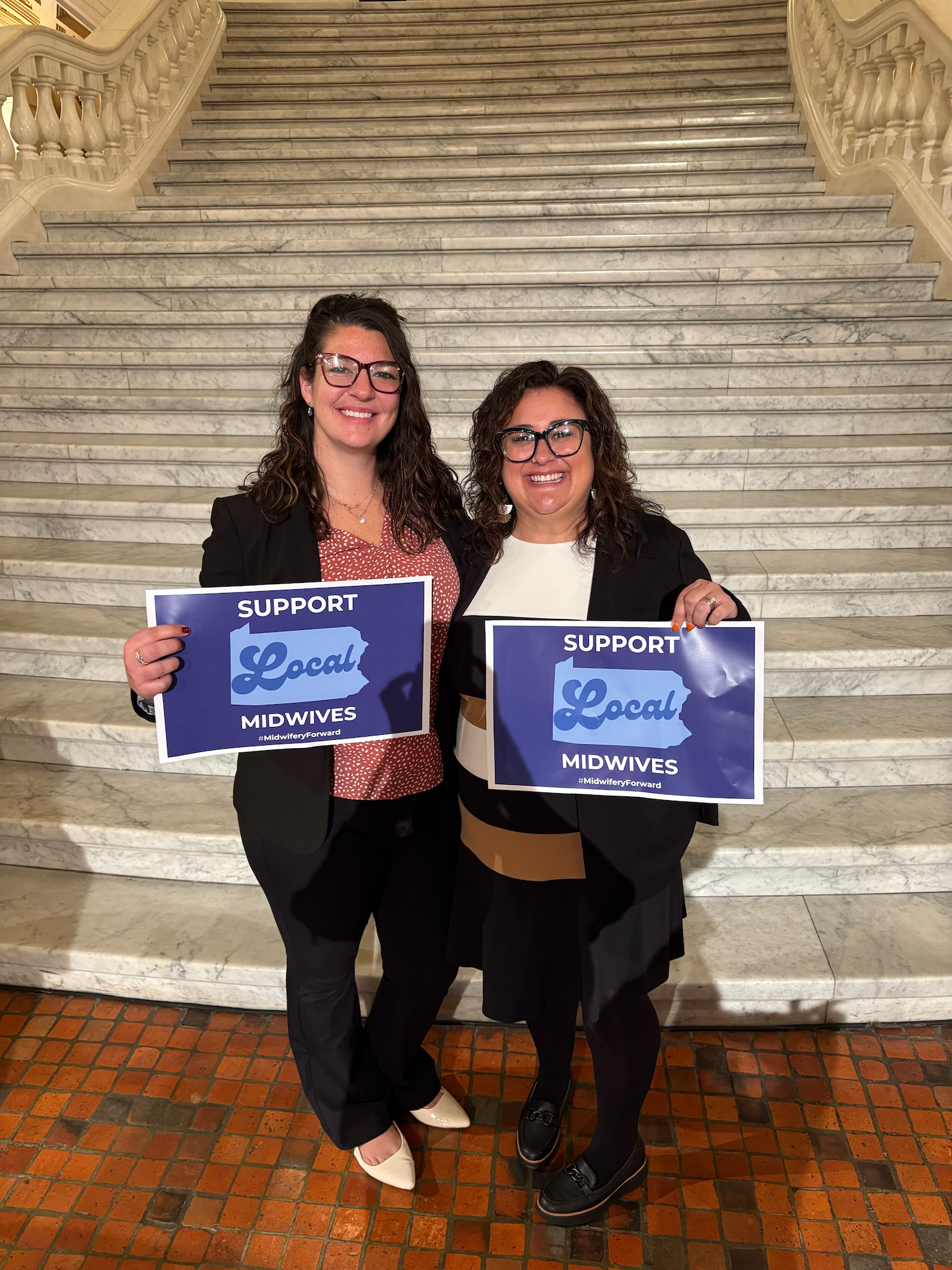
Emily Mcgahey, DM, MSN, CNM, FACNM, Clinical Director (right) with Erica Biesinger, Finance Consultant, during the Midwifery Forward Day of Advocacy in Harrisburg in October 2025.
Other policies that Pennsylvania has adopted include:
- Medicaid eligibility: PA has expanded income thresholds and postpartum coverage through 12 months
- Independent billing and practice for doulas: PA allows doulas to enroll as independent Medicaid providers
However, there is still a lot of work to be done. Through our collaborative agreements with physicians and hospitals, The Midwife Center’s Certified Nurse-Midwives have prescribing authority and hospital admitting privileges. However, PA midwives are not fully supported to practice independently in the law. Reimbursement rates also remain one of the biggest challenges for The Midwife Center and midwives in Pennsylvania, as the time-intensive, high-quality care we provide is not reimbursed at the same rate as physician services, despite exceptional and cost-saving outcomes from midwife-led care.
Learn more about maternity care access in Pennsylvania from March of Dimes.
How You Can Support
Together, we can invest in midwifery and birth center care and ensure everyone has access to high-quality maternal healthcare:
- Read & share the March of Dimes report: Raise awareness of maternity care deserts and the investments we need to solve this issue.
- Sign the petition: Call for One Million More Midwives to advocate for investments in the future of the midwifery workforce.
- Follow the American College of Nurse Midwives (ACNM): Stay up-to-date on federal legislation, advocacy efforts, and other efforts to improve access to midwifery care.
- Become a Midwife Center Advocate: Support The Midwife Center's long-term sustainability by starting a monthly donation today. Even $5 a month helps us meet our clients' immediate needs while we prepare to serve future generations.
